
Whole Saffron vs Standardised Extracts Explained
Learn the difference between whole saffron and standardised extracts, how botanical integrity is affected, and why formulation choices matter.
FAQ'S


Whole saffron supplements contain the complete saffron stigma in its natural form, while standardised extracts isolate selected compounds. This difference affects botanical integrity, formulation simplicity, and how closely a supplement resembles saffron itself.
Introduction: Same Plant, Very Different Ingredients
Two saffron supplements can look similar on the shelf and still be fundamentally different in what they contain.
The difference often comes down to whether the product uses:
Whole saffron, or
Standardised saffron extract
While both originate from the same plant, they are not equivalent ingredients. Understanding this distinction helps explain why some supplements remain single-ingredient products, while others require complex formulation support.
What Is Whole Saffron in Supplement Form?
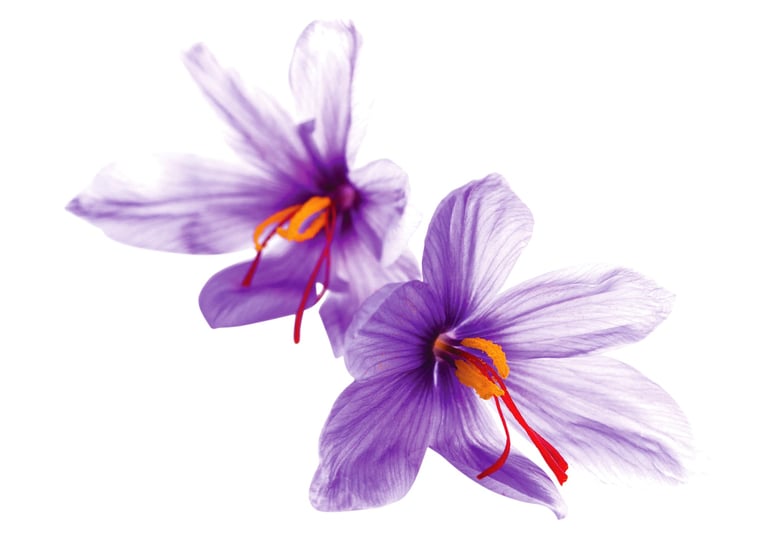
Whole saffron supplements are made from the entire dried stigma of the Crocus sativus flower.
The process is straightforward:
Harvesting
Drying
Milling
Encapsulation
No compounds are removed.
No ratios are altered.
No standardisation is applied.
The saffron remains intact as a botanical ingredient.
What Is a Standardised Saffron Extract?
A standardised extract is created by:
Extracting selected compounds from saffron using a solvent
Removing the remaining plant material
Adjusting the extract to contain a fixed amount of a chosen compound
The goal of standardisation is consistency, not completeness.
Once standardised, the ingredient no longer reflects saffron as a whole plant.
Defining Botanical Integrity
Botanical integrity refers to whether an ingredient:
Contains the full plant material, or
Contains only selected components
Whole saffron retains botanical integrity because:
The stigma structure is preserved
Natural compound relationships remain intact
No components are excluded by design
Standardised extracts do not retain this integrity.
Natural Ratios vs Fixed Targets
In whole saffron:
Compounds exist in naturally occurring proportions
Variation between harvests is part of the plant’s nature
In standardised extracts:
One compound is prioritised
Other components may be reduced or removed
Natural variation is engineered out
Neither approach is inherently wrong — but they serve different purposes.
Why Standardisation Changes the Ingredient
Standardisation requires intervention.
To reach a target specification:
Extracts may be concentrated
Diluted with carriers
Blended across batches
This means the final ingredient is shaped by manufacturing decisions, not by the plant itself.
Whole saffron does not undergo this adjustment.


Why Saffron Is Unique Among Botanicals
Many herbs must be extracted to be usable in capsule form.
Saffron is different because it is:
Effective in very small amounts
Naturally dry and stable
Easily milled without processing aids
This makes whole saffron suitable for encapsulation without extraction — a characteristic that is relatively rare among botanical ingredients.
Processing vs Preservation
Standardised extracts prioritise:
Control
Uniformity
Numerical precision
Whole saffron prioritises:
Preservation
Simplicity
Ingredient completeness
Understanding this distinction helps explain why some supplements remain minimal while others become complex.
How This Fits Into the Bigger Framework
This page builds on the broader explanation provided in the pillar article:
👉 Pure Saffron vs Saffron Extracts: What Most Supplements Don’t Explain
It also connects directly to:
Together, these pages form a complete picture of how saffron supplements are formulated.

Key Takeaway
Whole saffron and standardised saffron extracts are not interchangeable ingredients.
Whole saffron preserves the plant as it exists in nature.
Standardised extracts prioritise controlled composition.
Knowing the difference allows informed choices based on ingredient structure rather than marketing language.
FAQ
What does whole saffron mean in supplements?
Whole saffron refers to supplements made from the entire dried saffron stigma without extraction.
What is a standardised extract?
A standardised extract is adjusted to contain a fixed amount of a selected compound rather than the full plant material.
Does standardisation make a supplement better?
Standardisation improves consistency but does not mean the ingredient is more complete than whole saffron.
Does whole saffron contain fewer compounds than extracts?
No. Whole saffron contains the full range of compounds naturally present in the plant.
Why do extracts often need additional ingredients?
Extract powders usually require fillers or flow agents to support manufacturing.
Is extraction necessary for saffron supplements?
No. Saffron can be used in supplement form without extraction.

Address
34 Camelia Ave,
Logan Central, QLD 4114
Contacts
+61 410 343 678
hello@saffronco.com.au
All rights reserved @2025 Saffron Co.